Thursday, June 5, 2014

Who Is Harold Pinter?

An English playwright who achieved international success as one of the most complex post-World War II dramatists, Harold Pinter's plays are noted for their use of silence to increase tension, understatement, and cryptic small talk. Equally recognizable are the 'Pinteresque' themes – nameless menace, erotic fantasy, obsession and jealousy, family hatred and mental disturbance.

In 2005, Pinter was awarded the Nobel Prize for literature.

“There are no hard distinctions between what is real and what is unreal, nor between what is true and what is false. A thing is not necessarily either true or false; it can be both true and false.” - Harold Pinter

Harold Pinter was born in Hackney, a working-class neighborhood in London's East End, the son of a tailor. Both of his parents were Jewish, born in England. As a child Pinter got on well with his mother, but he didn’t get on well with his father, who was a strong disciplinarian. On the outbreak of World War II Pinter was evacuated from the city to Cornwall; to be wrenched from his parents was a traumatic event for Pinter. He lived with 26 other boys in a castle on the coast. At the age of 14, he returned to London. "The condition of being bombed has never left me," Pinter later said.

Pinter was educated at Hackney Downs Grammar School, where he acted in school productions. At school one of Pinter's main intellectual interests was English literature, particularly poetry. He also read works of Franz Kafka and Ernest Hemingway.

After two unhappy years Pinter left his studies at London's Royal Academy of Dramatic Arts. In 1949 Pinter was fined by magistrates for having, as a conscientious objector, refused to do his national service. Pinter had two trials. "I could have gone to prison – I took my toothbrush to the trials – but it so happened that the magistrate was slightly sympathetic, so I was fined instead, thirty pounds in all. Perhaps I'll be called up again in the next war, but I won't go." (from Playwrights at Work) Pinter's father paid the fine in the end, a substantial sum of money.

After four years acting in provincial repertory theatre under the pseudonym David Baron, Pinter began to write for the stage. The Room (1957), originally written for Bristol University's drama department, was finished in four days. A Slight Ache, Pinter's first radio piece, was broadcast on the BBC in 1959. His first full-length play, The Birthday Party, was first performed by Bristol University's drama department in 1957 and produced in 1958 in the West End. The play, which closed with disastrous reviews after one week. Although most reviewers were hostile, Pinter produced in rapid succession the body of work which made him the master of 'the comedy of menace.' "I find critics on the whole a pretty unnecessary bunch of people", Pinter said decades later in an interview. "We don't need critics to tell the audiences what to think."

Pinter's major plays originate often from a single, powerful visual image. They are usually set in a single room, whose occupants are threatened by forces or people whose precise intentions neither the characters nor the audience can define. The struggle for survival or identity dominates the action of his characters. Language is not only used as a means of communication but as a weapon. Beneath the words, there is a silence of fear, rage and domination, fear of intimacy.

"Pinter's dialogue is as tightly – perhaps more tightly – controlled than verse," Martin Esslin writes in The People Wound (1970). "Every syllable, every inflection, the succession of long and short sounds, words and sentences, is calculated to nicety. And precisely the repetitiousness, the discontinuity, the circularity of ordinary vernacular speech are here used as formal elements with which the poet can compose his linguistic ballet." Pinter refuses to provide rational justifications for action, but offers existential glimpses of bizarre or terrible moments in people's lives.

In 1960 Pinter wrote The Dumb Waiter. With his second full-length play, The Caretaker (1960), Pinter made his breakthrough as a major modern talent, although in Düsseldorf the play was booed. The Caretaker was followed by The Collection (1962), The Dwarfs (1963),The Lover (1963). The Homecoming (1965) is perhaps the most enigmatic of all Pinter's early works. It won a Tony Award, the Whitbread Anglo-American Theater Award, and the New York Drama Critics' Circle Award. After The Homecoming Pinter said that he "couldn't any longer stay in the room with this bunch of people who opened doors and came in and went out."

Several of Pinter's plays were originally written for British radio or TV. In the 1960s he also directed several of his dramas. After Betrayal (1978) Pinter wrote no new full-length plays until Moonlight (1994).

Pinter received numerous awards in his lifetime, including the Berlin Film Festival Silver Bear in 1963, BAFTA awards in 1965 and in 1971, the Hamburg Shakespeare Prize in 1970, the Cannes Film Festival Palme d'Or in 1971, and the Commonwealth Award in 1981. He was awarded a CBE in 1966, but he later turned down John Major's offer of a knighthood. In 1996 he was given the Laurence Olivier Award for a lifetime's achievement in the theatre. In 2002 he was made a Companion of Honour for services to literature. In 2005 he was awarded the Nobel Prize in drama.

Pinter was married from 1956 to the actress Vivien Merchant. For a time, they lived in Notting Hill Gate in a slum. Eventually Pinter managed to borrow some money and move away. Although Pinter said in an interview in 1966, that he never has written any part for any actor, his wife Vivien frequently appeared in his plays. After his first marriage dissolved in 1980, Pinter married the biographer Lady Antonia Fraser, whose former husband was the ­Conservative MP Hugh Fraser. The divorce separated Pinter from his son Daniel, a writer and musician.

Since the overthrow of Chile's President Allende in 1973, Pinter was active in human rights issues. Salman Rushdie, who had been "sentenced to death" by Ayatollah Khomeini, was asked to deliver the annual Herbert Read Lecture in 1990. Because he was living with the threat of murder, the lecture, entitled 'Is Nothing Sacred,' was read by Rushdie's friend Pinter. Pinter's opinions were often controversial. During the Kosovo crisis in 1999, Pinter condemned NATO's intervention, and said it will "only aggravate the misery and the horror and devastate the country". In 2001 Pinter joined The International Committee to Defend Slobodan Milosevic, which also included former U.S. Attorney General Ramsey Clark. Milosevic was arrested by the U.N. war crimes tribunal. In his speech to an anti-war meeting at the House of Commons in November 2002 Pinter joined the world-wide debate over the so-called "preventive war" against Iraq: "Bush has said: "We will not allow the world's worst weapons to remain in the hands of the world's worst leaders." Quite right. Look in the mirror chum. That's you." In February 2005 Pinter announced in an interview that he has decided to abandon his career as a playwright and put all his energy into politics. "I've written 29 plays. Isn't that enough?" Harold Pinter died from esophogeal cancer on December 24, 2008, in London.

Wednesday, June 4, 2014

Some Background on The Birthday Party


 The Birthday Party has been described as a Comedy of Menace. This was initially coined in an article by the drama critic Irving Wardle in 1958 as a play on words from “comedy of manners” – “manners” pronounced with an exaggerated English accent becomes “menace." And the term stuck.

Beyond the play on words, of course, the term does fit The Birthday Party quite well. The menacing element in the play is destiny “as an incurable disease which one forgets about most of the time and whose lethal reminders may take the form of a joke" (Wardle, "Comedy of Menace" in Encore magazine). The celebration of Stanley’s birthday hangs menacingly enough over most of the play, to resolve into what we can only imagine is Stanley’s destiny – being taken away by two mysterious men.

The Birthday Party is also often given as example for Theatre of the Absurd, which refers to the fluidity and ambiguity of time, place, and identity in the text. As an audience member of The Birthday Party, you can expect to feel confused at times about the story line, as the facts seem to contradict themselves at times, and characters respond to more than one name.

For example, in Act One, Stanley describes his career, saying "I've played the piano all over the world," followed immediately by "All over the country," and then by "I once gave a concert”. The character Goldberg responds to ‘Nat’, but in his stories of the past he refers to himself as ‘Simey’ and also ‘Benny’, and when talking about his partner McCann, he calls him both ‘Dermot’ and ‘Seamus’. Of course, none of this is actually absurd, one could theoretically come up with a plausible explanation for the multitude of names – nicknames, and the story about a career as a pianist could just be a lie that Stanley decides to tone down. But in the context of a staged play, for an audience member who is trying to follow the story, things get amusingly confusing. Which is, of course, part of Pinter’s charm.

By Ana-Catrina Buchser for the Dragon Theatre


Tuesday, April 8, 2014

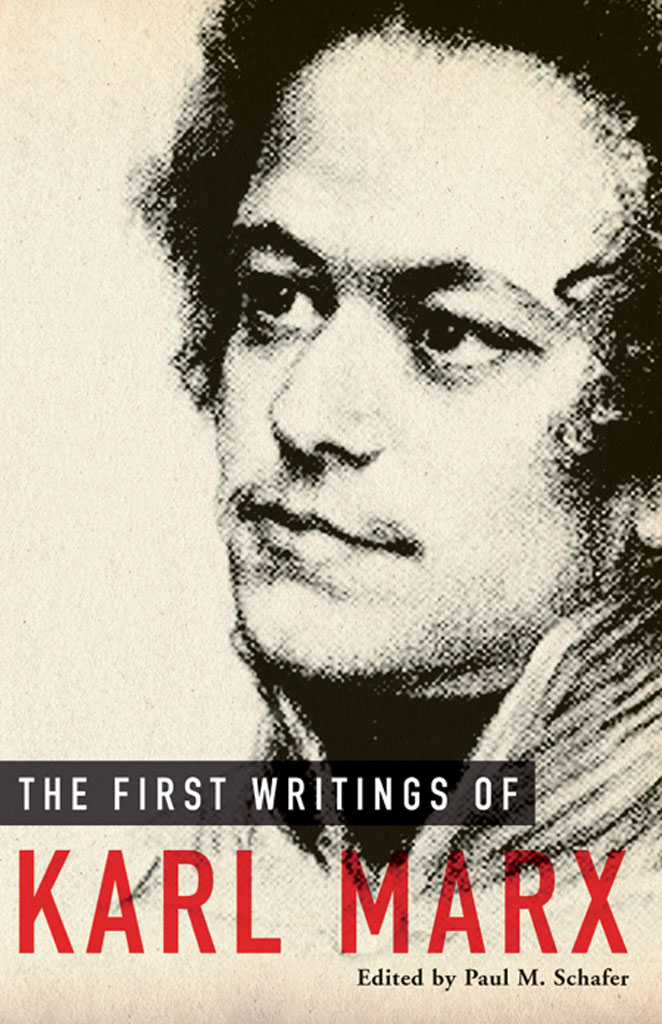
A Crash Course On Marx and Engels


Karl Marx and Friedrich Engels are regarded as the founders of the Marxist, revolutionary, socio-economical ideology called "Marxism." Their intellectual work was geared towards a global understanding of the socio-economic problems which seemed to originate within the human nature and organized societies. Such problems were prevalent in most governing systems of their time. The revolutionary aspect of Marx and Engels' ideology is centered on the notion that people needed to actively change the socio-economic system to a better form, instead of trying to preserve the existing status quo.

The Lives of Karl Marx & Friedrich Engels

Both Marx and Engels were born in Prussia, modern-day Germany, in 1818 and 1820 respectively.


Karl Marx was the son of a Jewish lawyer who wanted his son to also become a lawyer and directed him to law studies. However, as a youth, Karl was more oriented towards philosophical issues which he pursued in parallel.


Marx developed a critical eye for whatever was going on in society at that time, and used to write various articles and comments based on his views. In 1843, he went to Paris with the intention of publishing a journal regarding his ideas on social reform. The following year he met Engels and they both started participating in different groups  that shared the same reformative views. They also started spreading their ideas on "Revolutionary Proletarian Socialism" or in other words, on “Communism.” 

Through his interaction with Engels, Marx's love for revolutionary action was even more strengthened and as his beliefs combined with Engel's ideas, Marx became capable of penetrating the more practical social and economical levels of the governing systems. But the more he delved into the governing system of his time, the more he became critical of the system. The Paris government accused him of being a dangerous revolutionary and banished him in 1845. He went to Belgium, and together with Engels, he participated in a communism-support group which was called "Communist League" and wrote his famous work "Communism Manifesto.”

In 1848, he was banished from Belgium and went to London where he started writing "Das Kapital" the most widely-read critical analysis of capitalism. Marx stayed and worked in London until the end of his life in 1883.

Friedrich Engels was the son of a textile manufacturer and cotton plant owner. Although Engels did not finish high school due to family hardships, he was keen to read the philosophy of Hegel - which affected him greatly. Later on, he attended various university lectures and interacted with other Hegelians. Interaction with Moses Hess led him to see communism as an evolution of the Hegelian thought.

Friedrich Engels was deeply shocked when he traveled to England to work with his father who was an industrialist. Witnessing the unacceptable condition of laborers reinforced his communist ideals, contrary to his family's best interests. However, his family did not denounce him but rather sought to navigate him back to their line of less-radical thinking. 

Engels and Marx essentially started their cooperation in 1844, when the two men exchanged ideas and found that their co-operation was harmonious and their philosophies complementary. From that point onwards, they collaborated to issue a very significant amount of work until the death of Karl Marx in 1883, and even after that, Engels published two more of Marx's books. Engels died in 1895.

It is noteworthy that both men showed early signs of radical thinking. Marx could become a successful lawyer like his father; yet, his life was won by the greater issues that plagued society to the detriment of his own financial well-being, and to such an extent that Engels often had to support him financially.

Similarly, Engels could have lived as a successful industrialist, just like his father. However, he chose to pursue the same path as Marx, and due to his beliefs he practically lived as an exiled man in the margins of society. In a sense, both men lived their ideology as far as that was possible within the confines of a different social and financial system.

On a more personal level Marx was married to the daughter of a Prussian baron. They had seven children, but only three of them survived to adulthood due to poor living conditions. Engels was in a relationship but based on ideological grounds he never married nor did he have any offspring.

Their Work: Marxism

Marx and Engels' intellectual work consists of a plethora of books and articles. They were both excellent observers of the course of society and economy, which led them to analyze the existing social structures of their time

They systematically ripped apart the reasoning behind the organization, financial laws and social structure of the existing social system, highlighting the problems and proposing alternative revolutionary solutions that would solve them.

This socio-economical complex of analyzed facts and trends, plus ideas and suggestions for a more functional system is now called "Marxism." At its core, Marxism maintains that there is a very unfair exploitative situation of the average workers -the proletariat- by the rich elite of the world, the bourgeois. This system of exploitation is becoming even worse by the people's unprotesting participation in it, because this way the system continues to produce more and more wealth for the elite that controls it. The poor are thus enslaved even more, because of the uneven distribution of wealth and the ever-increasing distance between those who own the capital and the workers who can only sell their labor.

Marx and Engels tried to make people understand that this capitalist system is not profitable for everyone, but only for those few at the top of the pyramid who enjoy immense riches. These riches are a result of exploitation and owning immense capital allows the elite's perpetual dominance and the superior-inferior interactions in society. 


Marxism suggests that the system needs total restructuring. In order for this restructuring to become feasible, the inherent injustices of capitalism have to be eliminated. All forms of capital, and especially the critical infrastructure and production means such as land, factories or machinery must be distributed to the people by law. Moreover, prohibiting the ownership of capital ensures that no controlling mechanisms of exploitation can exist in the future by those who aim to accumulate excess wealth. 

When people share riches, all social divisions and all forms of differentiation will crumble, and humanity, instead of being divided in capitalists and workers, will be in a state of union through a de facto classless society.

Marx understood that this reform was rather unrealistic to take place during his lifetime, and he only expected that this change would be done when there was a sufficient degree of social fermentation with people's active participation in this revolutionary idea.

It is interesting to note that Marx also believed that religion served a useful role in suppressing workers. Finding comfort in religion to escape the misery of daily life, or having to pray to a superior being for hope was apparently preventing people from assuming full responsibility for their own life and changing it through revolution.


Information provided by http://www.deepspirits.com/great-people/marx-engels/

Monday, April 7, 2014

Who Is Jeffrey Hatcher?

Jeffrey Hatcher. 

Broadway: Never Gonna Dance (book).  

Off-Broadway: Three Viewings and A Picasso at Manhattan Theatre Club; Scotland Road and The Turn of the Screw at Primary Stages; Tuesdays with Morrie (with Mitch Albom) at The Minetta Lane; Murder by Poe, The Turn of the Screw, and The Spy at The Acting Company; Neddy at American Place; and Fellow Travelers at Manhattan Punchline. Other Plays/Theaters: Compleat Female Stage Beauty, Mrs. Mannerly, Murderers, Mercy of a Storm, Smash, Armadale, Korczak's Children, To Fool the Eye, The Falls, A Piece of the Rope, All the Way with LBJ, The Government Inspector, Dr. Jekyll and Mr. Hyde and others at The Guthrie, Old Globe, Yale Rep, The Geffen, Seattle Rep, Cincinnati Playhouse, Cleveland Playhouse, South Coast Rep, Arizona Theater Company, San Jose Rep, The Empty Space, Indiana Rep, Children's Theater Company, History Theater, Madison Rep, Intiman, Illusion, Denver Center, Oregon Shakespeare Festival, Alabama Shakespeare Festival, Milwaukee Rep, Repertory Theater of St. Louis, Actors Theater of Louisville, Philadelphia Theater Company, Asolo, City Theater, Studio Arena and dozens more in the U.S. and abroad. 

Film/ TV: Stage Beauty, Casanova, The Duchess, and episodes of Columbo. 

Grants/Awards: NEA, TCG, Lila Wallace Fund, Rosenthal New Play Prize, Frankel Award, Charles MacArthur Fellowship Award, McKnight Foundation, Jerome Foundation, and Barrymore Award Best New Play. 

He is a member and/or alumnus of The Playwrights Center, the Dramatists Guild, the Writers Guild, and New Dramatists.


Bio courtesy of playscripts.com