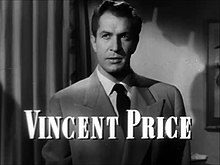
One of the great things about my job is the research I get to do on authors and plays. My inner history geek rears her sexy head (history geeks are sexy, right?) and we just go online and spend hours reading. I have been looking forward to digging into Tennessee Williams because he lived in my hometown, St. Louis. A lot of his works are very midwestern feeling, and several plays take place in St. Louis. But it's funny, while I can reel off a ton of random facts about other local celebs, Tennessee Williams doesn't get a lot of press in St. Louis. In fact, this year there was a centennial celebration, but not for Williams. This is the year of the Vincentennial - the celebration of the 100th birthday of Vincent Price. I've not heard a peep about St. Louis' other famous son's 100th birthday. And, in doing the research, I'd guess it might be because Williams wasn't so terribly fond of the city.
Thomas Lanier Williams was born on March 26th, 1911 in Columbus, Mississippi. If you thought he was a bit younger, and born in 1914, it's because he lied on a form to enter a writing contest.

When Williams was 13 his family moved from small little Columbus to St. Louis, Missouri, and by all accounts, Williams was miserable there. They lived in a crowded, low-rent tenement, Williams was often picked on at school, and he just didn't like big city life much.
His father (Cornelius) was a shoe salesman and worked at a shoe factory in St. Louis; his mother (Edwina) a southern minister's daughter. His father was reported to drink and gamble heavily, and often got into big, violent, fights with Williams' mother.
Williams was close to his older sister, Rose, who was diagnosed as schizophrenic in her late teens. There was an incident in which Rose accused her father of making sexual advances toward her. As a result, Rose was institutionalized and eventually lobotomized, which completely incapacitated her. Williams cared for his sister for most of his life and was often tortured by the thought that maybe one day he might also lose his mind. Williams battled depression, alcoholism, and drug abuse for most of his adult life.
He hopped around universities and eventually graduated from the University of Iowa. Upon graduation he moved to New Orleans and took the name Tennessee. He was often referred to as "Tennessee" by his college frat brothers because of his southern drawl. Tennessee was his father's home state so it could have been a bit of an homage to his roots.
His first successful production was The Glass Menagerie, which opened in Chicago in December of 1944, and moved to New York in March of 1945. Menagerie won Williams the New York Drama Critics Circle Award.

A Streetcar Named Desire was Williams' biggest hit. The show opened in New York in 1947, with the then unknown Marlon Brando and Jessica Tandy in the show's starring roles. Williams actually wrote the role of Blanche with Tallulah Bankhead in mind, but Tandy impressed. When Streetcar opened on Broadway, the audience was stunned. There was silence as the curtain descended. And then the house erupted into applause for a full 30 minute ovation. The play's frank look at brutality and sexuality was revolutionary. The play went on to win Williams a Pulitzer Prize and then the team was contracted to create a film version.
For the film, director Elia Kazan went with Vivien Leigh, who played Blanche in the London production under director (and husband) Lawrence Olivier. Leigh got the film role, partly because the studios wanted a "name." Leigh, who was diagnosed as bipolar, wowed Tennessee Williams with her performance (he said that Leigh brought to the role "everything that I intended, and much that I had never dreamed of"), and later Leigh commented that playing Blanche "tipped me over into madness."
Williams had some success after Streetcar, Cat on a Hot Tin Roof came out in 1955, but nothing could come close to the success of Streetcar.
For further readings on Tennessee Williams and A Streetcar Named Desire, I suggest the following:
Our next blog will focus more on Streetcar itself so stay tuned!