Friday, July 29, 2011

Talking Tennessee


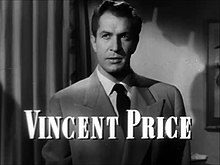
One of the great things about my job is the research I get to do on authors and plays. My inner history geek rears her sexy head (history geeks are sexy, right?) and we just go online and spend hours reading. I have been looking forward to digging into Tennessee Williams because he lived in my hometown, St. Louis. A lot of his works are very midwestern feeling, and several plays take place in St. Louis. But it's funny, while I can reel off a ton of random facts about other local celebs, Tennessee Williams doesn't get a lot of press in St. Louis. In fact, this year there was a centennial celebration, but not for Williams. This is the year of the Vincentennial - the celebration of the 100th birthday of Vincent Price. I've not heard a peep about St. Louis' other famous son's 100th birthday. And, in doing the research, I'd guess it might be because Williams wasn't so terribly fond of the city.

Thomas Lanier Williams was born on March 26th, 1911 in Columbus, Mississippi. If you thought he was a bit younger, and born in 1914, it's because he lied on a form to enter a writing contest.
When Williams was 13 his family moved from small little Columbus to St. Louis, Missouri, and by all accounts, Williams was miserable there. They lived in a crowded, low-rent tenement, Williams was often picked on at school, and he just didn't like big city life much.

His father (Cornelius) was a shoe salesman and worked at a shoe factory in St. Louis; his mother (Edwina) a southern minister's daughter. His father was reported to drink and gamble heavily, and often got into big, violent, fights with Williams' mother.

Williams was close to his older sister, Rose, who was diagnosed as schizophrenic in her late teens. There was an incident in which Rose accused her father of making sexual advances toward her. As a result, Rose was institutionalized and eventually lobotomized, which completely incapacitated her. Williams cared for his sister for most of his life and was often tortured by the thought that maybe one day he might also lose his mind. Williams battled depression, alcoholism, and drug abuse for most of his adult life.

He hopped around universities and eventually graduated from the University of Iowa. Upon graduation he moved to New Orleans and took the name Tennessee. He was often referred to as "Tennessee" by his college frat brothers because of his southern drawl. Tennessee was his father's home state so it could have been a bit of an homage to his roots.

His first successful production was The Glass Menagerie, which opened in Chicago in December of 1944, and moved to New York in March of 1945. Menagerie won Williams the New York Drama Critics Circle Award.

A Streetcar Named Desire was Williams' biggest hit. The show opened in New York in 1947, with the then unknown Marlon Brando and Jessica Tandy in the show's starring roles. Williams actually wrote the role of Blanche with Tallulah Bankhead in mind, but Tandy impressed. When Streetcar opened on Broadway, the audience was stunned. There was silence as the curtain descended. And then the house erupted into applause for a full 30 minute ovation. The play's frank look at brutality and sexuality was revolutionary. The play went on to win Williams a Pulitzer Prize and then the team was contracted to create a film version.

For the film, director Elia Kazan went with Vivien Leigh, who played Blanche in the London production under director (and husband) Lawrence Olivier. Leigh got the film role, partly because the studios wanted a "name." Leigh, who was diagnosed as bipolar, wowed Tennessee Williams with her performance (he said that Leigh brought to the role "everything that I intended, and much that I had never dreamed of"), and later Leigh commented that playing Blanche "tipped me over into madness."

Williams had some success after Streetcar, Cat on a Hot Tin Roof came out in 1955, but nothing could come close to the success of Streetcar.

For further readings on Tennessee Williams and A Streetcar Named Desire, I suggest the following:


Our next blog will focus more on Streetcar itself so stay tuned!


Monday, July 18, 2011

Preparing to Ride the Streetcar


We're about ten days from opening our next show, the American classic,
A Streetcar Named Desire. Streetcar is widely considered one of THE American plays by one of THE great American playwrights. It has iconic roles that actors would kill to play. This weekend, on Twitter, someone asked Alec Baldwin what his dream theatre role would be and he replied "I played that when I did STREETCAR in 1992."

Want to brush up on your Streetcar? Instead of watching the Elia Kazan film with Vivian Leigh, Kim Hunter, Marlon Brando and Karl Malden, check out "Who Am I This Time?" with Christopher Walken and Susan Sarandon. Based on a Kurt Vonnegut short story, it tells the story of a small town hardware clerk who finds himself while treading the boards of his local community theatre. Directed by Jonathan Demme, it was filmed as a part of the American Playhouse TV series.

Here's a sneak peek at our Blanche (Meredith Hagedorn) working her feminine wiles on Mitch (Troy Johnson).


Want another tease? Peninsula Backstage, the local television show covering Bay Area theatre, is working up a piece on our production. They've released a look at some of the rehearsal footage here. This was taken during the designer run through so it's not a real rehearsal - the designer run is for the people on the design side (the costumer, set builder, light and sound folks) to get a feel for the look and atmosphere and progress of the production a few weeks out. Peninsula Backstage will have a whole Streetcar episode coming out with footage and interviews coming out soon so stay tuned!

Opening night is sold out, as is the August 6 performance and the rest of opening weekend is darn near sold out so if you want to catch this show, and it's only running for four weeks, get your tickets as soon as possible either online or by calling the box office (open 27/7) at 1-800-838-3006. See you at the show!

Wednesday, June 15, 2011

The Confessional Poetry of Anne Sexton

One of the things that Lessa Bouchard, director of Tongue of a Bird told me early on was that, in her mind, the script was similar to the female confessional poetry of the late 1950's/early 1960s. In our chat she specifically referenced Anne Sexton and Sylvia Plath as touchstones. Since it's been approximately a million years since I studied poetry in high school I had to hit the books to refresh my memory. Here's what I dug up from Poets.org on the subject.

Confessional poetry is the poetry of the personal or "I." This style of writing emerged in the late 1950s and early 1960s and is associated with poets such as Robert Lowell, Sylvia Plath, Anne Sexton, and W.D. Snodgrass. Lowell's book Life Studies was a highly personal account of his life and familial ties, and had a significant impact on American poetry. Plath and Sexton were both students of Lowell and noted that his work influenced their own writing.

The confessional poetry of the mid-twentieth century dealt with subject matter that previously had not been openly discussed in American poetry. Private experiences with and feelings about death, trauma, depression and relationships were addressed in this type of poetry, often in an autobiographical manner. Sexton in particular was interested in the psychological aspect of poetry, having started writing at the suggestion of her therapist.

The confessional poets were not merely recording their emotions on paper; craft and construction were extremely important to their work. While their treatment of the poetic self may have been groundbreaking and shocking to some readers, these poets maintained a high level of craftsmanship through their careful attention to and use of prosody.

One of the most well-known poems by a confessional poet is "Daddy" by Sylvia Plath. Addressed to her father, the poem contains references to the Holocaust but uses a sing-song rhythm that echoes the nursery rhymes of childhood:

Daddy, I have had to kill you.
You died before I had time--
Marble-heavy, a bag full of God,
Ghastly statue with one gray toe
Big as a Frisco seal

And what that explanation, I can see why Lessa was struck by the similarities between the poetry and Tongue of a Bird. Lessa mentioned the Sexton poem "The Double Image" which I wanted to read. It's a bit long so rather than copying it here I'll link you to it.

Much like Tongue of a Bird, "The Double Image" deals with the grandmother, mother, daughter relationship with elevated language and poetic imagery.

McLaughlin is a difficult and interesting writer. She's translated a number of ancient Greek tragedies to contemporary English productions and in many ways, Tongue of a Bird, seems to be her stab at a Greek tragedy. Greek tragedy was poetic and used imagery to convey meanings, but it was much less personal and confessional and more often offered worship to the Greek gods or memorialize a war. I found an interesting interview online with McLaughlin, and, when asked which work she was proudest of she said

As a playwright, I’ve written about a dozen plays now, many of which are adaptations of Greek plays. The adaptations vary widely in terms of how closely they cleave to the original work, but all are inspired by what I perceive as the primal formative power of that ancient work. One of the productions I’m most proud of was a version of The Trojan Women I wrote for refugees from the Bosnian War who had fled the former Yugoslavia and were living in NY in the mid 1990s. I received a grant from the Lila Wallace Reader’s Digest Fund that allowed me to organize the project with a psychiatric social worker who had experience in Yugoslavia and with the American Friends Service Committee, which helped me to recruit participants in the project, none of them professional actors, all of them traumatized to some extent by the war.

What we were able to achieve in the project was a real confirmation of the community-building and healing capability of the theater.
And, in my mind, this is the central purpose for Tongue of a Bird - healing. It's not an easy show, but it's elegant and lovely, and has stuck a chord in a number of our audience members. Theatre isn't always easy, and often it's inspiring, even in small ways. Based on the reaction from some of our patrons, Tongue was worth doing, as hard as it is to produce and live in as an actor, and watch in the small darkness of the theatre, because it's really resonated with some people in a really great way.

Clearly we should do a light-hearted comedy next. Oh wait, next up is A Streetcar Named Desire. Nevermind. ;)

Did you see Tongue of a Bird? Did it dredge up some emotions for you? What did you think of McLaughlin's choice of language and themes?

Wednesday, June 8, 2011

Little Wings

As I work up a new post full up with interesting information related to Tongue of a Bird, I give you this song that I really dig that kind of reminded me of the show.

The performer is Kris Delmhorst and the song is called "Little Wings."


Happy hump day! Enjoy!